
Sex Offender Checks in Hall County
The main official channel is the Georgia Sex Offender Registry. It opens with conditions of use and an agreement gate. The GBI describes it as a public awareness and safety resource. State corrections and parole agencies enter many initial records, GBI enters people who move into Georgia from another state, and county sheriffs maintain registration details for people living locally. Each source plays a distinct role, so a searcher should not treat the database as a document created by one office at one moment.
The Hall County Sheriff's Office is the local verification channel. GBI expressly advises contacting the sheriff in the county of residence when information, especially an address, appears wrong. For a person who may live outside Georgia, add the federal National Sex Offender Public Website. It searches participating jurisdictions across state lines. Neither channel should be replaced by a commercial people-search result.
The GBI registry service page gives the official scope and links to the public tool.
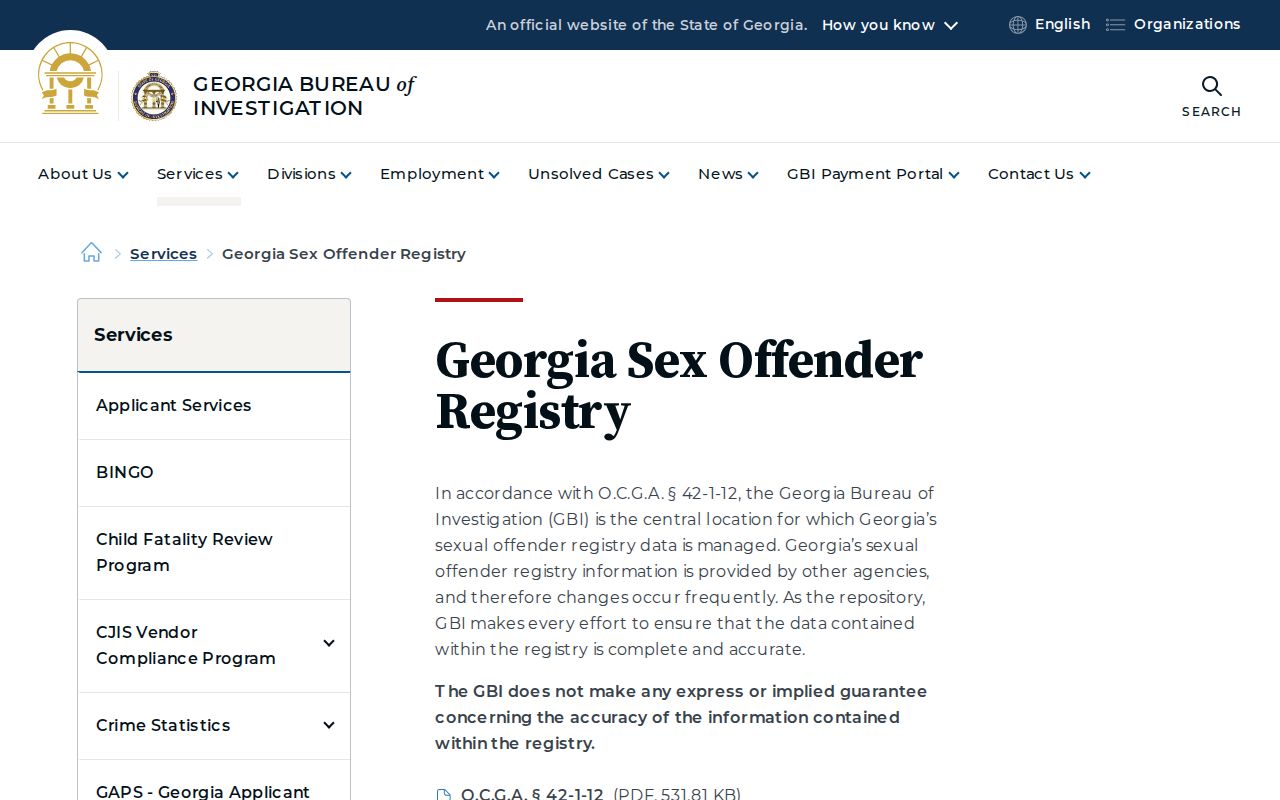
That state page is the right starting point for authority and updates, while the live search supplies individual profiles.
Why Hall Registry Records Change Daily
The registry is not a frozen census. GBI says it updates the database daily as agencies send changes, while Hall County's sheriff must update information supplied locally within two business days. A move, a new sleeping location, a corrected identifier, or a newly submitted registration may therefore appear after an earlier search. The timing explains why two checks made on different days can produce different details without either screen being fabricated.
A missing name also has several possible causes. The person may not meet Georgia's registration criteria, may be deceased, may have completed a qualifying First Offender sentence, or may be newly registered but not yet submitted. A misspelled name or wrong county filter can hide the correct entry as well. Absence from one result list is never a clearance certificate.
How to Search the Georgia Sex Offender Registry
Use broad identifiers first, then narrow the result. Read and accept the conditions before entering search terms. Compare more than a name because common names, aliases, and address changes can create false assumptions.
- Open the official Georgia registry and accept its conditions of use.
- Search with the available name or place details, using Hall County when appropriate.
- Compare the list against identity details and open the likely profile.
- Review the full record, then ask the residence sheriff to verify an apparent error.
| Search detail | Use | Required | Reading tip |
|---|---|---|---|
| Name | Identity search | No single field is documented as universal | Try spelling and known aliases carefully |
| County | Place filter | No | Select Hall for a local residence search |
| City or ZIP | Narrow place results | No | Do not assume city limits match county lines |
| Profile identifiers | Confirm a possible match | After opening a result | Compare photo, descriptors, address, and offense facts |
The public registry conditions screen makes the state warning visible before any search.
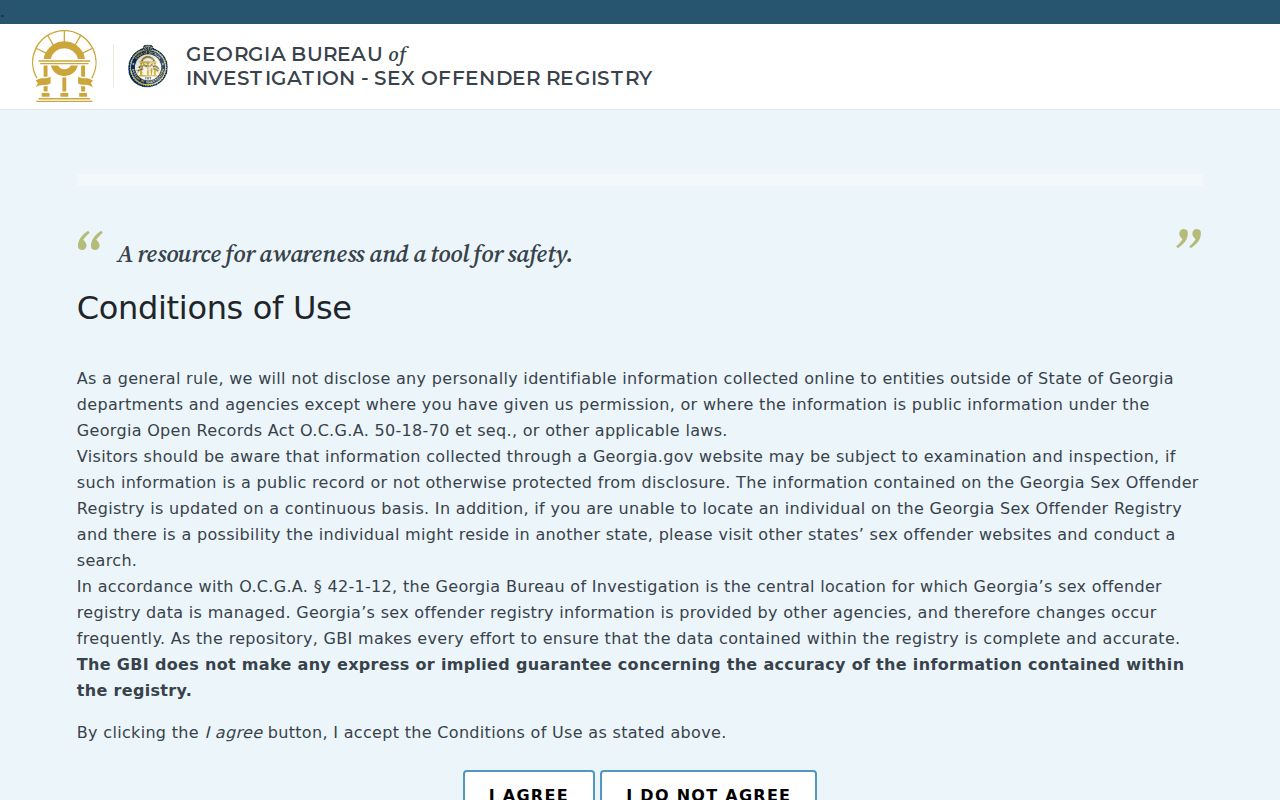
The gate matters because it frames the results as changing public information that must be used lawfully.
Hall County Sheriff's Verification Role
Registration takes place in person with the sheriff of the county of residence. A qualifying person must report within 72 hours after release from prison, placement on parole, supervised release or probation, or entry into Georgia. A person without a fixed home reports to the sheriff where that person sleeps and supplies the sleeping location. Required changes generally must also be reported within 72 hours.
Hall County's role does not turn the local office into a separate public registry. The sheriff gathers and verifies local facts, photographs and fingerprints registrants during required reporting, and sends updates into the state system. When an address on a Hall profile appears stale, note the profile and exact disputed fact. Report it to the Hall County Sheriff's Office rather than confronting the resident. That gives the agency a precise item to check.
The GBI registry FAQ explains the sheriff verification chain and common reasons for missing results.
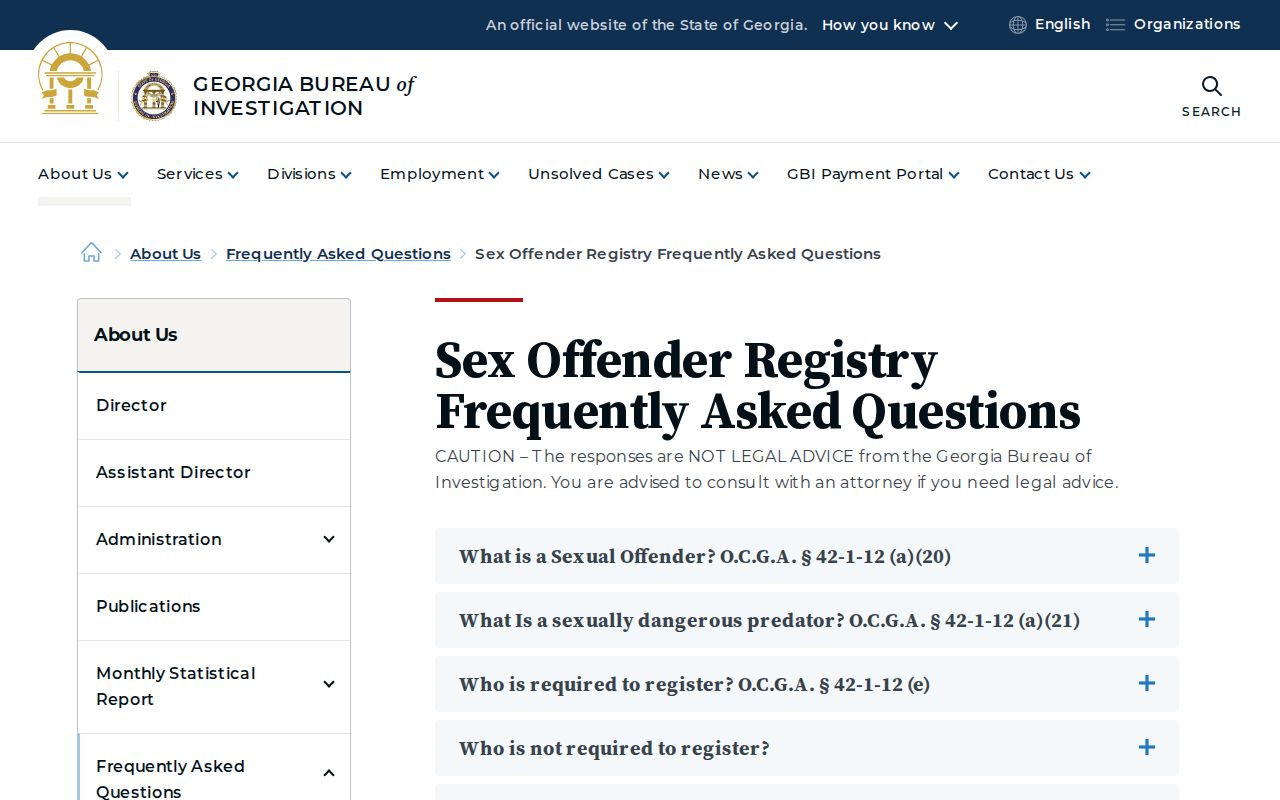
Those answers show why local confirmation is part of a sound Hall County sex offender search.
Inside a Registry Profile
A Georgia public profile combines identity, place and conviction information. Read those fields together. A photo or name alone is too weak for a confident match, and the listed offense does not by itself describe a person's current behavior.
| Name and aliases | Published identity names used to distinguish records and locate alternate spellings. |
|---|---|
| Photo and physical description | Photograph, physical traits, and recorded scars, marks or tattoos may help confirm identity. |
| Residence or sleeping location | The registered address, or reported sleeping location for a person without a fixed home. |
| Conviction information | Qualifying offense and conviction facts supplied to the registration system. |
| Work, school and vehicles | Employer or occupation, school information when applicable, and vehicle or tag details. |
| Classification and status | Georgia risk designation and available registration or verification information. |
Treat each item as a lead for verification, not an invitation to infer facts that the profile does not state. Registry classification is not a new conviction, and a residence line is not a claim that every nearby person faces a specific threat.
Reading Hall Registry Results Carefully
Start with the profile's stated facts. Separate a conviction from a risk classification, and separate a registered address from a claim about current conduct. The GBI makes no express or implied guarantee that every entry is complete or accurate because source agencies provide the information and changes continue. That warning does not make the registry useless. It tells searchers to compare identifiers and use the sheriff as the correction channel.
The Judicial Council data exchange dashboard illustrates how Georgia justice information moves among agencies.

Registry records follow their own statutory pipeline, but the dashboard reinforces a key point: public justice systems receive data on different schedules.
Georgia Registration Levels and Requirements
Georgia does not use the federal shorthand of automatic 10-year, 25-year and lifetime public tiers. State registration is generally for life, excluding time spent incarcerated, unless a court grants release or another statutory mechanism applies. Georgia separately assigns Level I, Level II, or sexually dangerous predator classifications through its risk review system. These are risk designations, not three preset expiration dates.
| Georgia designation | General duration | Verification |
|---|---|---|
| Level I | Generally life unless judicial or statutory release applies | Annual in-person birthday reporting |
| Level II | Generally life unless judicial or statutory release applies | Annual in-person birthday reporting |
| Sexually dangerous predator | Generally life unless judicial or statutory release applies | Annual birthday report plus an additional six-month report |
Each registrant renews in person during the 72 hours before the person's birthday and is photographed and fingerprinted. Failure to comply, false information, or a missed birthday report can produce a felony prosecution. Juveniles do not register unless tried and convicted as adults.
The GBI publication of O.C.G.A. § 42-1-14 provides the official classification law.
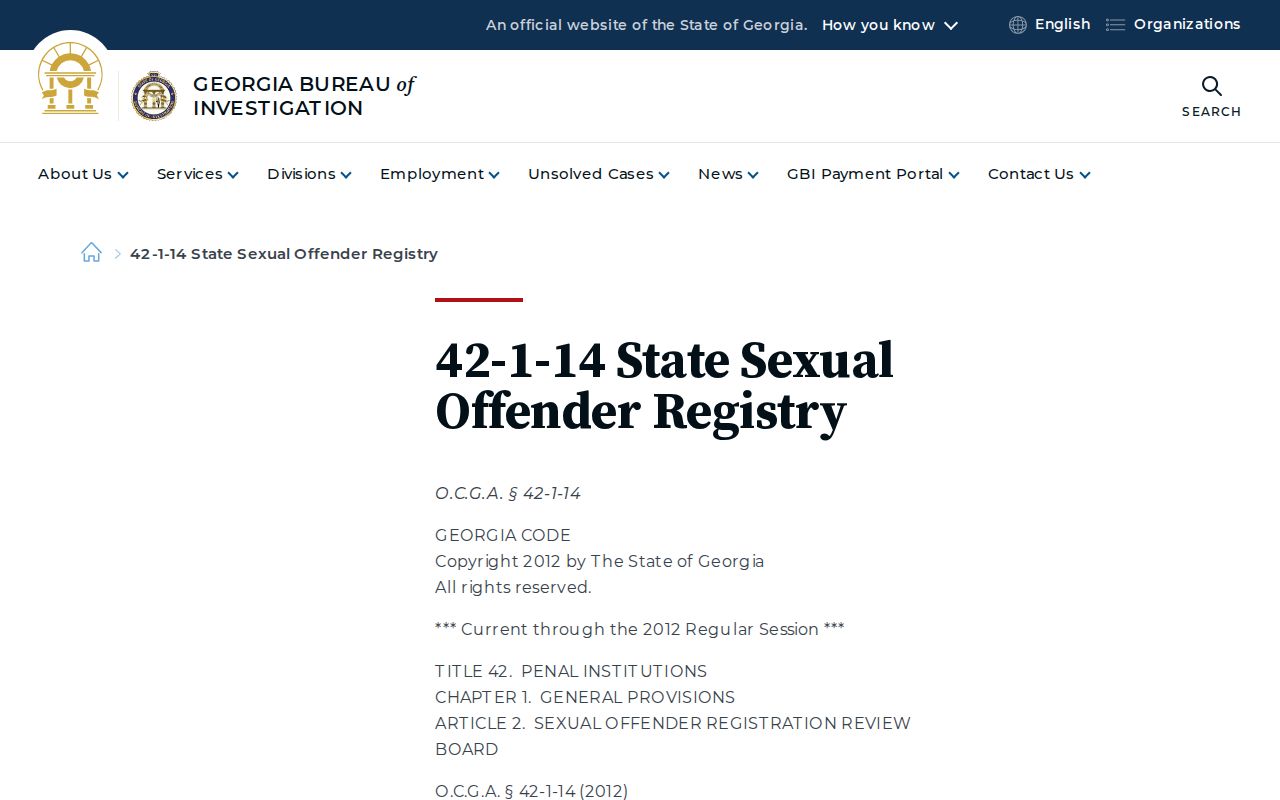
The statute supports the Level I, Level II and sexually dangerous predator terms used in Georgia profiles.
Hall County's 72-Hour Reporting Windows
The same number appears at several key points, but the events differ. Initial registration follows release, supervision placement or entry into Georgia. A move or other required information change starts another reporting duty. Annual renewal occurs in the 72 hours before the birthday, not at any convenient time during the month. A sexually dangerous predator has the added six-month reporting point.
These windows help explain status changes in Hall County registry records. A recent move may be within an agency processing interval, but an apparently wrong address should still go to the sheriff. Searchers should record the date they checked and avoid presenting a saved screen as permanently current.
Release From Georgia Registration
Lifetime registration does not mean that every record is immune from court review. O.C.G.A. § 42-1-19 allows specified people to petition superior court after completing prison, parole, supervised release and probation components and meeting a statutory category. A Georgia conviction petition goes to the county of conviction. An out-of-state conviction petition goes to the Georgia county where the person resides.
The district attorney and relevant sheriffs receive service of the petition. A judge decides the request; removal is not automatic because enough years have passed. After a denial, another petition generally cannot be filed for two years. Until relief is granted and reflected in official systems, a searcher should rely on the current public status and avoid predicting an outcome.
Community Notification and Lawful Use
Registry data serves awareness and lawful safety planning. Families can use it to understand nearby listed addresses, confirm a known person's profile, or broaden a search through NSOPW when residence may cross state lines. The record must not become a tool for confrontation. Report suspected noncompliance or an incorrect Hall County address to law enforcement and let the agency investigate.
Use registry information lawfully. Harassing, threatening, intimidating, or committing a crime against a registrant or household member can lead to prosecution; O.C.G.A. § 42-1-12 forbids misuse of registry information.
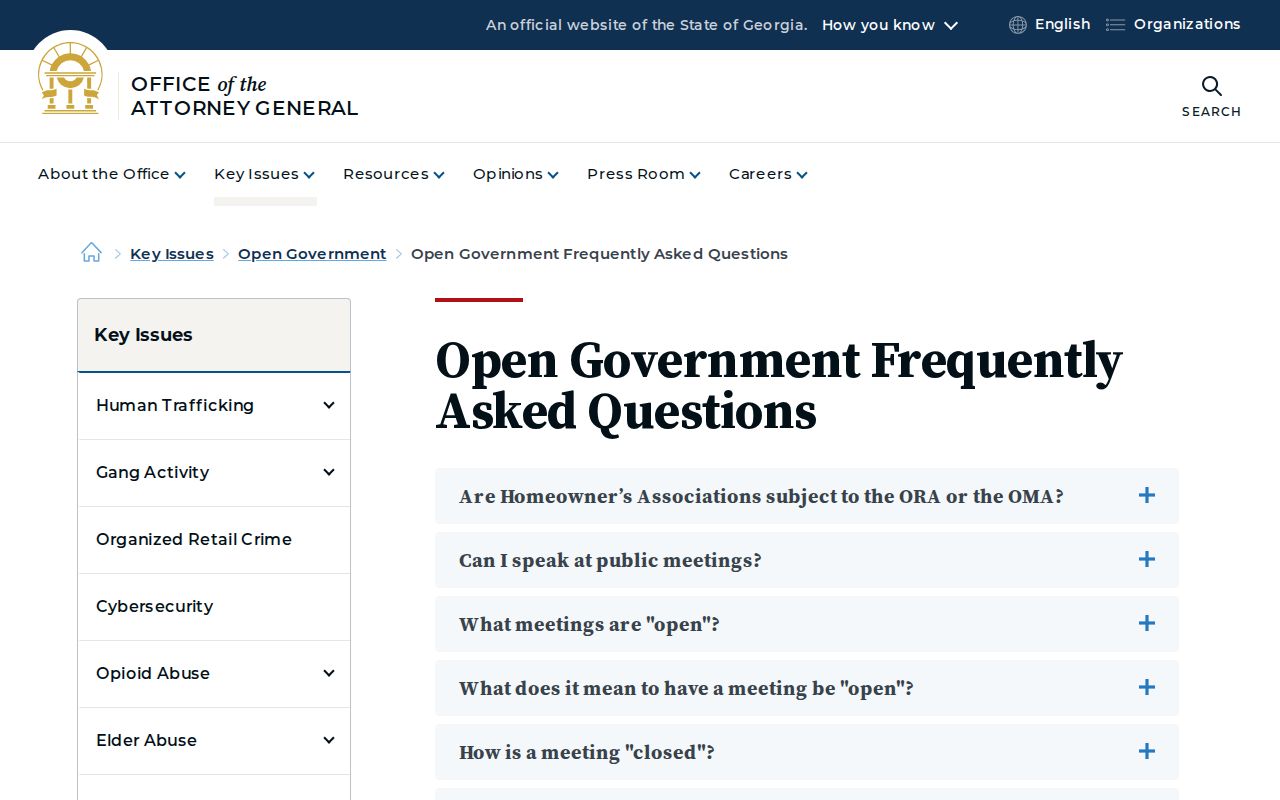
The Georgia Attorney General's Open Government FAQ explains the state's wider public-record framework.
Public access carries a duty to use official information with care and to verify it at the source.