
Hall County Criminal Court Cases
Hall County belongs to Georgia's Northeastern Judicial Circuit. Superior Court tries felony cases, while Hall County State Court hears misdemeanors and related traffic prosecutions. The Northeastern Judicial Circuit District Attorney prosecutes the Superior Court cases. The Hall County Solicitor, based on the first floor of the courthouse, prosecutes State Court misdemeanors and county ordinance cases demanded to a jury trial.
The Clerk of Superior and State Courts maintains both sets of Hall County criminal court files. Magistrate Court has a separate role: it handles arrest and search warrant applications, first appearances, and preliminary or committal proceedings, but conducts no jury trials. Gainesville, Flowery Branch, and Oakwood municipal courts retain their own qualifying traffic and ordinance files unless a matter moves into a county court.
Superior Felonies Versus Hall County State Misdemeanors
The court name is more than a label. It indicates which prosecutor, judge, and docket own the filed case. A felony may first leave a record in Magistrate Court before an indictment or accusation appears in Superior Court. A misdemeanor that begins with an arrest ordinarily moves toward State Court. A municipal citation may remain with the city court.
| Hall County court | Criminal role | Best access channel |
|---|---|---|
| Superior Court | Felony trial-level cases | Online Docket or Clerk Criminal Division |
| State Court | Misdemeanors and qualifying traffic cases | Online Docket or Clerk Criminal Division |
| Magistrate Court | Warrants, first appearances, preliminary matters | Clerk by telephone or counter |
This division explains why one name search may not reveal the full Hall County court trail. The searcher must match the event to its court and stage.
The Hall County State Court source illustrates the county's misdemeanor court channel.
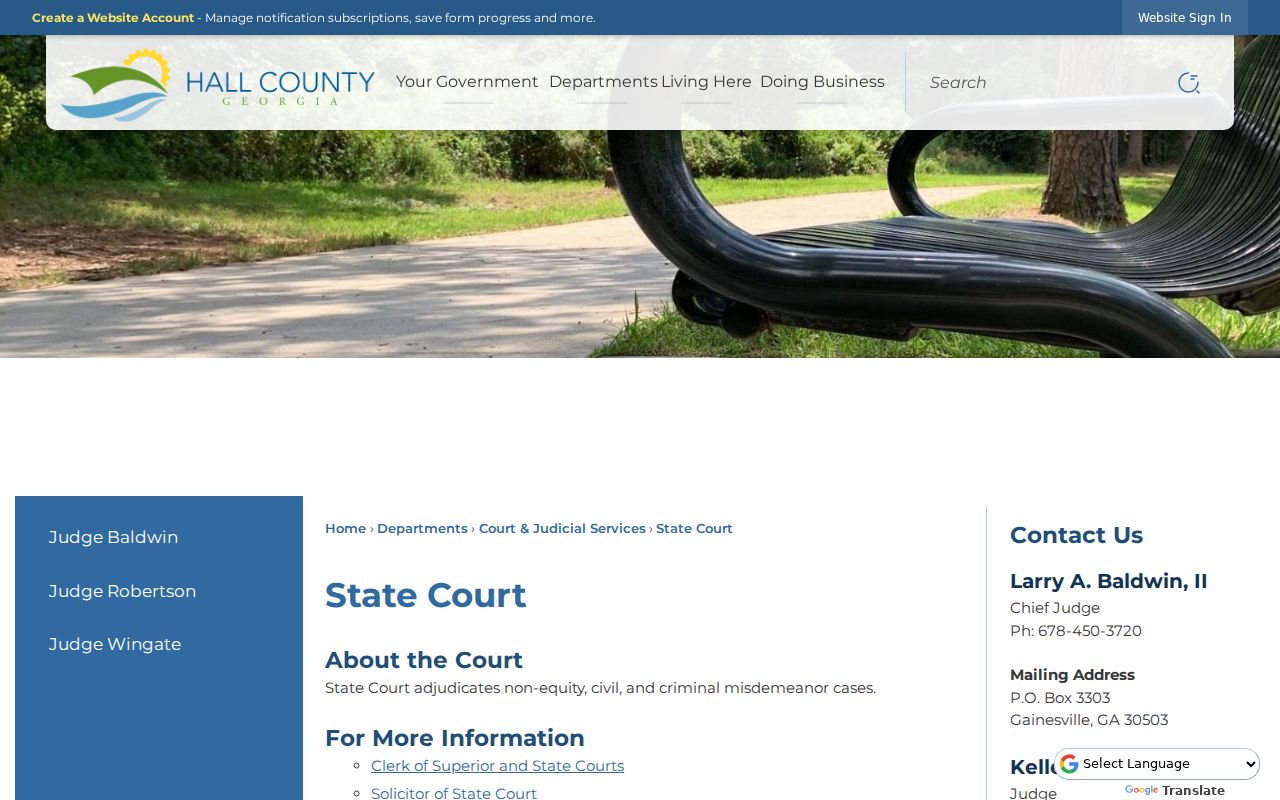
The official screen anchors the misdemeanor part of the local court split.
Searching Hall County Case Records
The official Hall County Online Docket routes users to Superior and State Court case access. Its public gateway warns that information is provided as is, so an online display is a convenience copy rather than the Clerk's certification. The research did not confirm the redirected vendor's exact year coverage or current field order.
- Open the Hall County gateway and choose the Superior/State Courts route.
- Use a known case number when possible; otherwise use confirmed party identifiers offered by the live form.
- Confirm whether the result belongs to Superior or State Court and compare its filing date and charge.
- Read docket entries, status, disposition, and available documents as separate fields.
- Call the Clerk Criminal Division for an older file, certification, unavailable paper, or final confirmation.
| Field Label | Type | Required | Notes |
|---|---|---|---|
| Party Search | Gateway route | Not confirmed | Use verified identifiers; current vendor controls require live review |
| Docket Search | Gateway route | Not confirmed | Best when a docket or case number is known |
| Attorney Search | Gateway route | Not confirmed | Legacy gateway reference; verify on the current form |
| Court division | Route selection | Yes | Separate Superior/State access from Magistrate matters |
The Hall County Online Docket source shows the gateway used to route court searches.
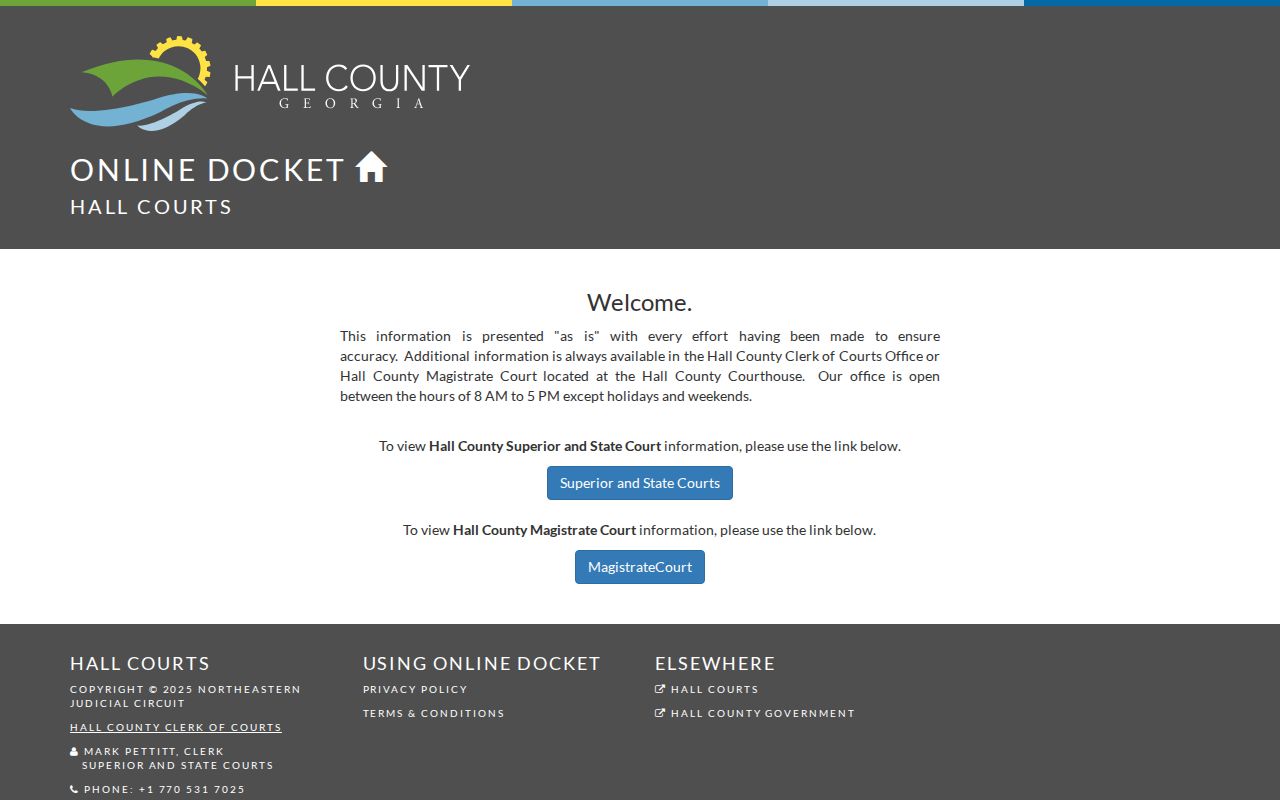
The gateway is the starting point, while the Clerk remains the official custodian.
The Hall County Clerk's Criminal Division
The definitive Hall County criminal court record remains with the Clerk at 225 Green Street SE in Gainesville. The Criminal Division telephone is 770-531-7038. The courthouse is open weekdays from 8:00 a.m. to 5:00 p.m. This counter is the fallback when a docket document is unavailable, when certification matters, or when an older Hall County case does not appear online.
The official Clerk directory separates criminal staff and records functions. A focused request should include the court, case number if known, party name, approximate year, and the exact document sought. That detail helps distinguish a judgment from a docket sheet or charging instrument.
The Hall County Solicitor source identifies the office that prosecutes State Court misdemeanors.
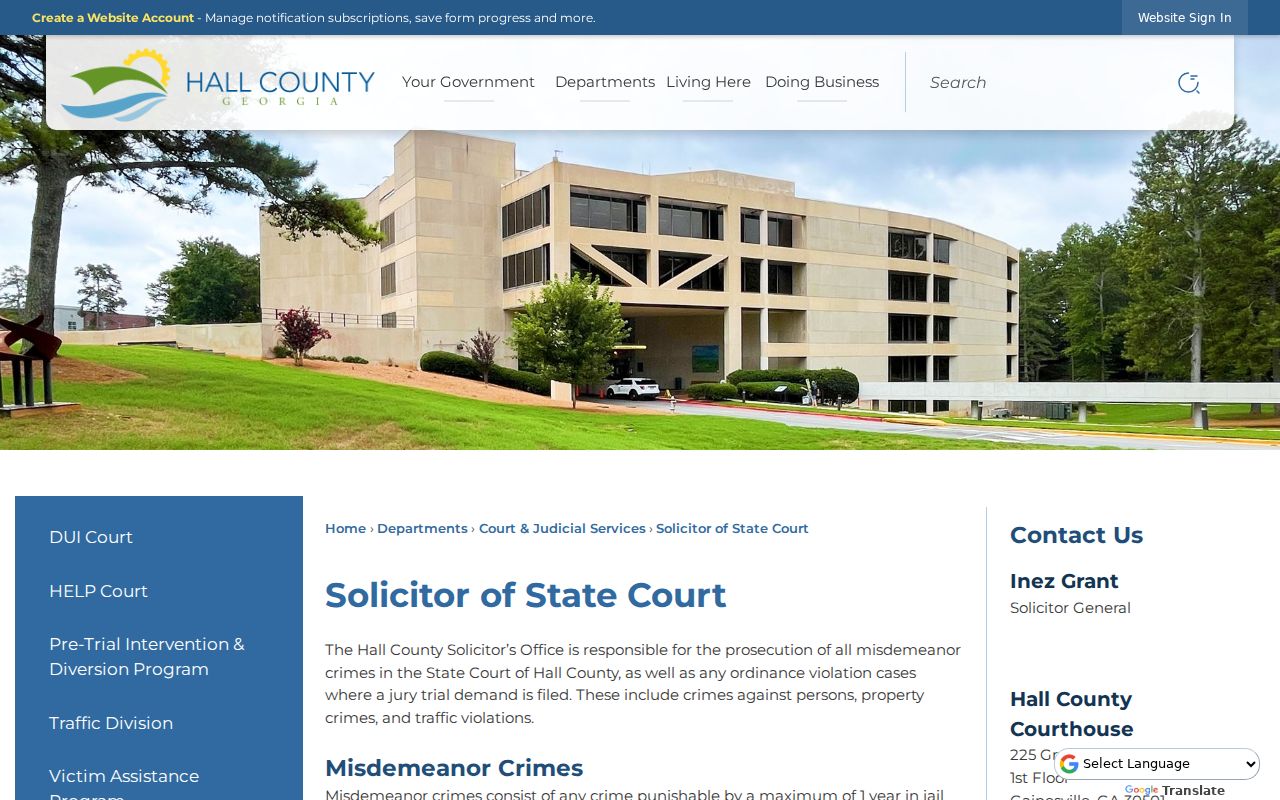
That office identity helps a reader distinguish prosecution records from the Clerk's case file.
Inside a Hall County Case File
A Hall County criminal case file records the prosecution chosen after the arrest stage. It may contain an accusation or indictment, motions, orders, hearing entries, a plea or trial result, judgment, and sentence. Those records answer a different question from the booking entry, which captures the allegation and custody event at intake.
| Case Number & Court | Identifies the Hall County division and links filings to one prosecution. |
|---|---|
| Charging Document | Shows the accusation or indictment and the charges prosecutors elected to file. |
| Docket Entries | Chronological notices of filings, motions, orders, and other case events. |
| Hearing Dates | Scheduled or completed arraignments, motions, trial, and sentencing events. |
| Disposition & Judgment | Records dismissal, plea, acquittal, conviction, or another adjudicated outcome. |
| Sentence & Conditions | States confinement, supervision, fines, treatment, or First Offender terms when entered. |
Reading Hall County Disposition Terms
A booking charge and filed charge may differ because prosecutors review the allegation before proceeding. A Hall County docket marked dismissed means the filed count did not produce a conviction. Nolle prossed indicates that the prosecution declined to continue that charge at that time. Dead docket status pauses a case without itself creating a conviction.
- Convicted
- A judgment of guilt was entered; read the judgment and sentence for exact terms.
- First Offender
- Special Georgia sentencing status whose effect depends on correct entry and successful completion.
- Disposition missing
- The court case may be complete even though the final outcome has not yet linked to GCIC.
Note: Read the filed count and final order together instead of treating the original arrest label as the court's outcome.
How a Criminal Case Moves
A custodial case may begin with arrest and booking, followed by a Magistrate first appearance. Prosecutors then determine the filed charge. An accusation or indictment begins the trial-court file, followed by arraignment, motions, and hearings. The matter may end by dismissal, plea, or trial before judgment and sentencing. The county does not publish one universal timetable for every case.
Case flow: Charges Filed › Arraignment › Pretrial › Plea or Trial › Disposition › Sentencing
When Hall County Magistrate Records Are Missing Online
Georgia Magistrate Records does not publish Hall County Magistrate criminal matters in its public web search. That exclusion can hide the earliest visible step of a recent case, including a warrant, first appearance, or preliminary hearing, even when later Superior or State Court activity has not begun.
Call Hall County Magistrate Court at 770-531-6912 or use its courthouse counter from 8:00 a.m. to 5:00 p.m. on weekdays. Ordinary copies are listed at $0.25 and certified copies at $3. No in-person money transaction is accepted after 4:30 p.m. Describe the specific matter and ask what releasable criminal information the clerk can provide.
The Hall County Magistrate Court source explains this separate criminal-record route.
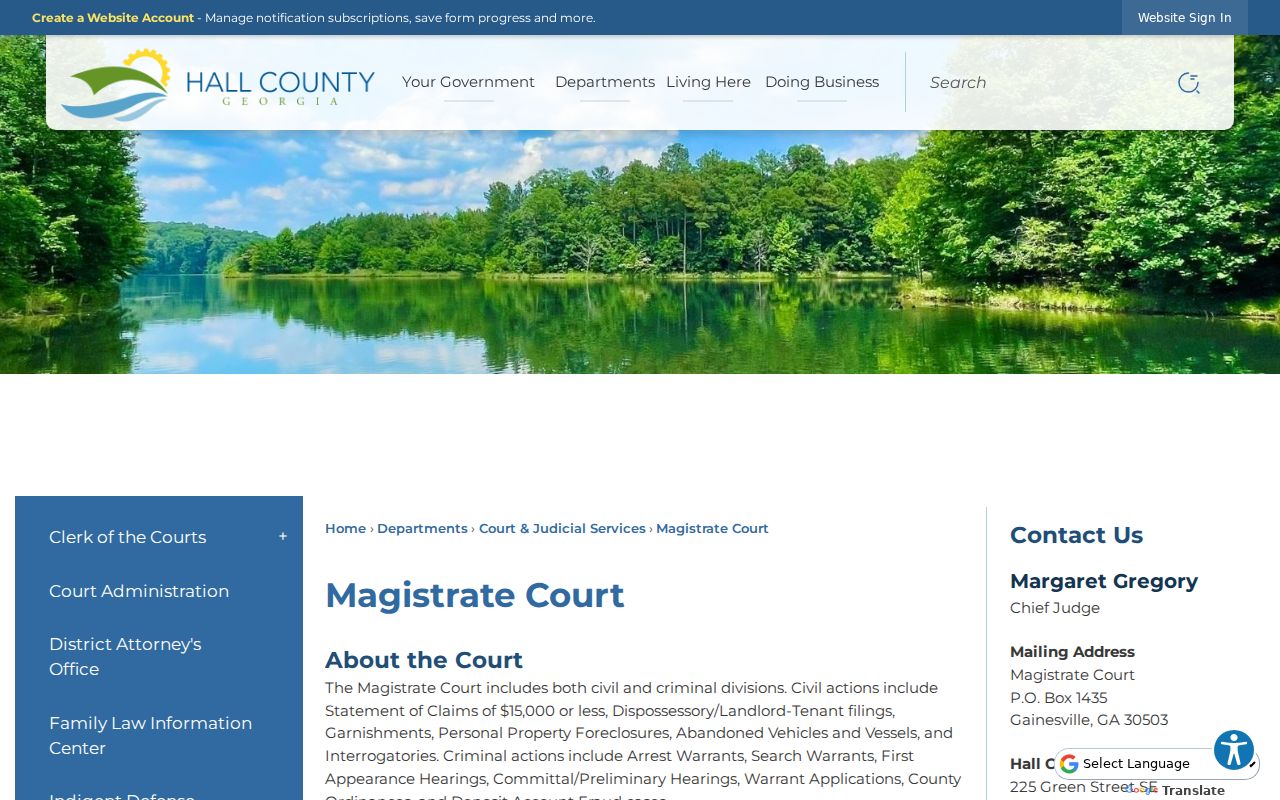
Its separate channel matters most before a case reaches the Superior or State docket.
Case Record Access & Restrictions
Georgia's court records are generally open, but online access does not remove statutory confidentiality. Juvenile matters, sealed records, protected victim details, Social Security numbers, account data, and other sensitive information may be withheld or redacted. A missing Hall County result can reflect the wrong court, an early Magistrate stage, restriction, sealing, an older file, or a search mismatch.
The Georgia Open Records Act requires a timely response to a proper request for existing records, but it does not override a court seal or criminal-history dissemination limit. Court certification should come from the Clerk. If a correct disposition never reached GCIC, start with the Hall County court or originating agency that owns the source event before asking GCIC to amend the statewide history.
The Sheriff's criminal-history source shows a different records channel that should not be confused with a court file.
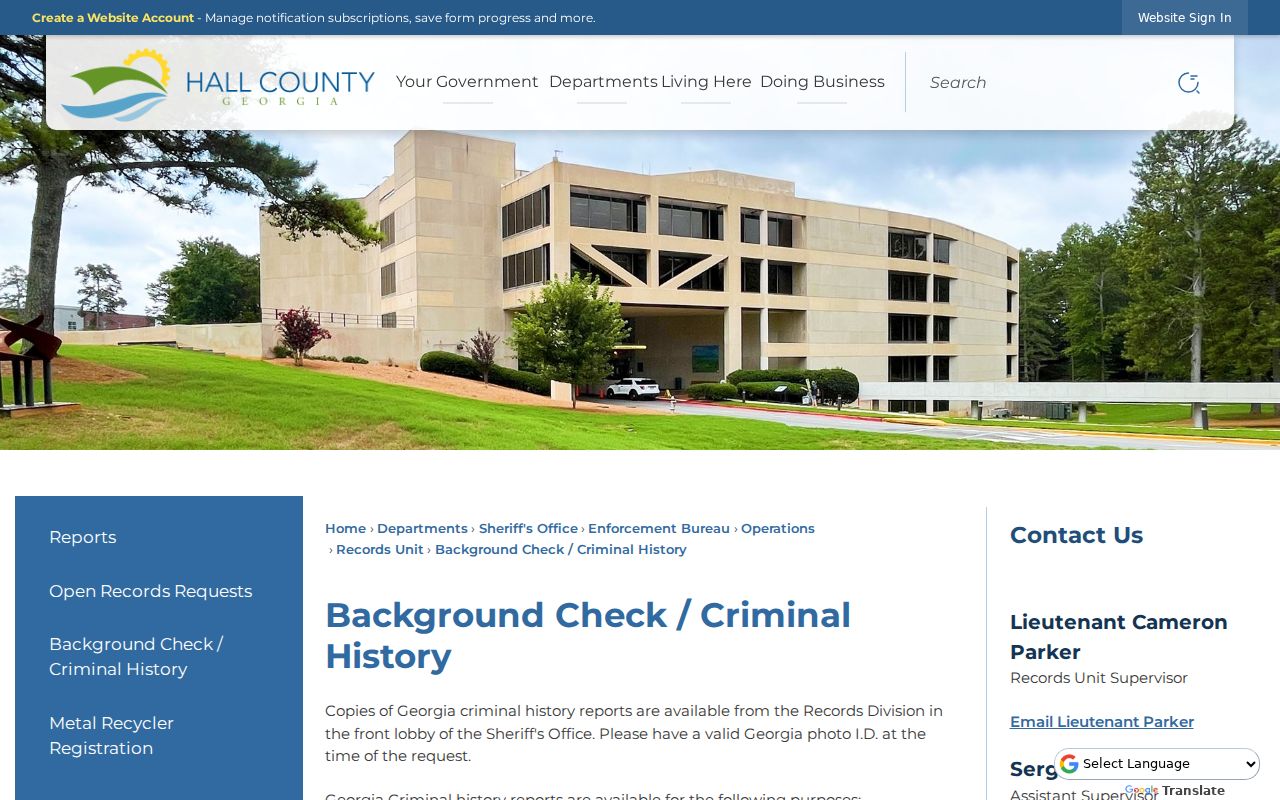
This contrast reinforces why the docket and GCIC history can answer different questions.
Hall County HELP Court Behind the Docket
HELP Court is a local mental-health track serving eligible misdemeanor and felony matters. Hall County describes links to counseling, physicians, substance-use treatment, therapy, community services, and a case manager. Sexual offenses and serious violent crimes are excluded. Progress may support a reduction, dismissal, or less severe sentencing recommendation, but the docket and final order control the actual outcome.
The program shows why a bare status label may not tell the whole story. Orders, conditions, treatment milestones, and the ultimate disposition can matter when reviewing one's own Hall County criminal court case. The county reports an 11 percent graduate recidivism rate, a program measure rather than a promise about any individual file.
Hall Drug Court supplies another local example. Chief Superior Court Judge Jason Deal presides, and Hall County considered an FY2026 accountability-court grant for staffing, services, supplies, and training. A specialty track does not create a separate public history product. Its legally significant events remain in the Hall County court record, subject to the same access limits and any order entered by the judge.
The Hall County inmate-list source provides the custody-side comparison.
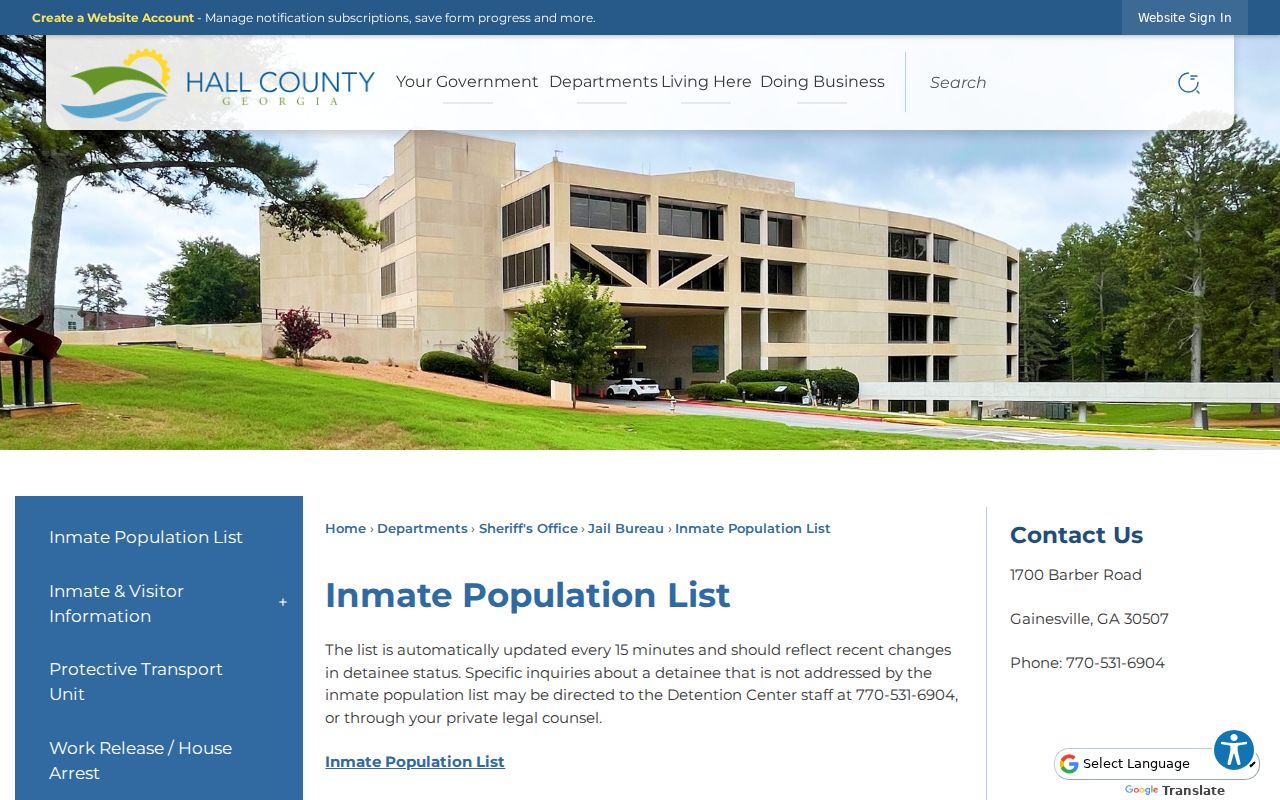
A custody listing cannot replace HELP Court orders or the final criminal disposition.