
Checking Criminal History in Gainesville
Start with the event, not a broad name search. Gainesville Police Department holds reports its officers created. Gainesville Municipal Court holds its own traffic and city-code case files. Hall County Jail creates a separate booking record after transport, and the Hall County clerk holds later felony or misdemeanor filings. Georgia Felon Search is narrower still because it reports qualifying in-state felony convictions rather than every city contact.
A sound Gainesville criminal record check uses the following order. It also avoids treating one missing result as proof that no record exists.
- File a Gainesville Police records request through the city's JustFOIA portal for the incident or arrest narrative.
- Ask Gainesville Municipal Court about a city traffic or ordinance file when that court had jurisdiction.
- Check the Hall County inmate channel for current or recent jail custody and bond information.
- Search the Hall Superior and State Court docket for charges filed beyond municipal court.
- Use an official Georgia history channel for a broader state record, with fingerprint review for the strongest self-check.
Match full names with dates of birth, event dates, case numbers, and agencies. Name-only matches can join the wrong person to a Gainesville record.
Gainesville Records Have Four Addresses
Gainesville is Hall County's seat, so several record counters sit close together but do different work. City police and Municipal Court share 701 Queen City Parkway SW. The city's designated records specialist works through the City Manager's Office at 300 Henry Ward Way, Suite 303. Hall Superior and State Court records are centered at 225 Green Street SE. Current detention records come from the Hall County Jail at 1700 Barber Road.
This physical split is a useful filing map. Queen City Parkway is the starting point for police questions and municipal files. Henry Ward Way anchors the city open-record process. Green Street is for county criminal court files. Barber Road answers custody and bond questions. A police report does not move into the courthouse merely because prosecutors later file a case.
An official Hall County news source shows the local government context captured in the first assigned research image.
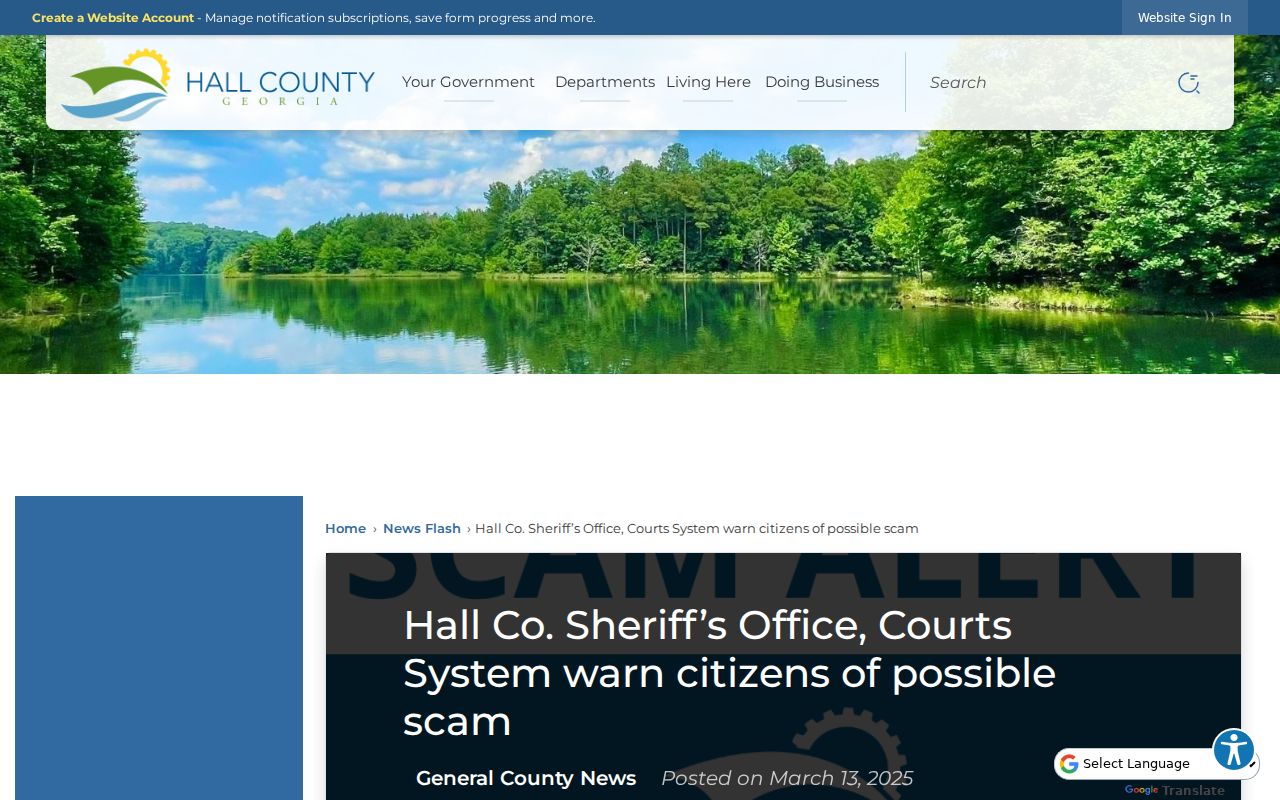
The image reinforces why Gainesville city records must be separated from Hall County records even when both systems operate in the county seat.
Gainesville Police Department Records
GPD is at 701 Queen City Parkway SW, Gainesville, GA 30501. Its main telephone is 770-534-5252, fax is 770-535-5620, and the nonemergency incident line is 770-534-5251. Published administrative hours are Monday through Friday, 8:00 a.m. to 5:00 p.m. The department creates incident and arrest reports, officer narratives, and related police media. It does not own the later Hall County court disposition.
Requesters should describe an existing record. Useful details include the event date and time range, location, report number, involved person, and requested format. A request can seek an incident narrative, supplement, photograph, dispatch record, or video. Active investigations, juvenile information, victim identifiers, and protected media may be withheld or redacted under a cited law.
The Gainesville Police online services page is the source for the assigned view of the co-located city services.
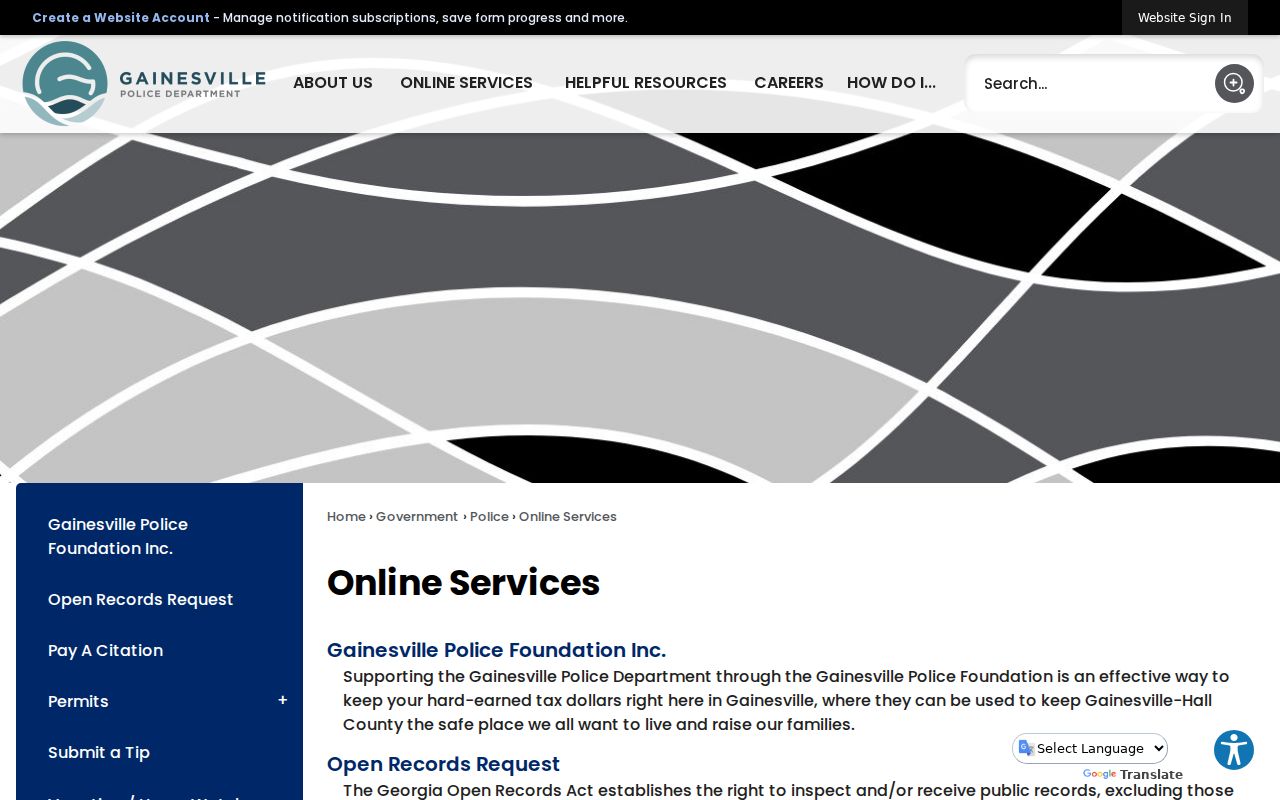
That shared location is convenient, but the police and court counters remain distinct custodians.
Request Gainesville Reports Through JustFOIA
All city open-record requests, including GPD requests, go through the Gainesville JustFOIA New Request portal. The application supports a new request and request tracking. Its conditional fields can change, so a requester should follow the live prompts rather than rely on an assumed form layout. The city sends responses in writing and by email when possible.
Georgia's response rule requires the city to state within three business days whether responsive records exist, whether they may be released, and when records that are not readily available should be produced. That is a response deadline, not a promise that a large video or heavily redacted file will arrive within three days.
| Cost item | Gainesville rule |
|---|---|
| Initial labor | First 15 minutes free |
| Later labor | Lowest-paid qualified full-time employee's hourly rate |
| Black-and-white letter/legal copies | $0.10 per page |
| Certification | $1 first record; $0.50 each later record |
Terri Kapetanis is the designated records specialist at 300 Henry Ward Way, Suite 303, Gainesville, GA 30501, telephone 770-535-6864. Payment is due when records are received.
Gainesville Arrests and Bookings
A GPD arrest produces at least two possible records. Police create the report that describes the alleged event. Hall County Jail creates the booking and custody entry after transport. The official county inmate list routes to Police-to-Citizen and is described by Hall County as refreshing every 15 minutes. Detention questions can go to 770-531-6904.
No verified public Gainesville arrest blotter was found in the city sources. For a recent event, use JustFOIA for the city narrative and the Hall inmate channel for custody. If charges were filed, the Hall Online Docket or the appropriate clerk supplies the court stage. An arrest is not a conviction, and a booking charge may be amended or replaced.
The county's official custody-related notice supplies another assigned research image.

Official notices are useful verification aids, but they do not replace the police report, booking entry, or filed disposition.
For more county-wide detail, the Hall County arrest lookup explains the full booking channel.
Gainesville PIO Form Is Different
The Gainesville Police Public Information contact form is not the city's open-record intake. The city warns that sending a records demand through that ordinary contact can delay or prevent fulfillment. The PIO form asks for first and last name, telephone, email, and comments or questions. It is useful for communication, not for invoking the designated JustFOIA workflow.
This distinction matters when time is short. Put the identifiable record request into JustFOIA, keep the tracking information, and use the PIO contact only for a suitable public-information question. Do not submit the same demand to several city channels at once, since duplicate routing can make ownership less clear.
An official public-information announcement provides the assigned image below.

The source illustrates the public-information layer, which must not be confused with the formal records-request channel.
Municipal Court Records in Gainesville
Gainesville Municipal Court hears misdemeanor traffic violations and violations of the City Code. The clerk's counter at 701 Queen City Parkway SW is open Monday through Friday, 8:00 a.m. to 5:00 p.m., and the telephone number is 770-531-2668. The city lists Judge Hammond Law, Deputy Director Angie Floyd, Clerk Mayra Ruelas, and additional court staff.
No public name-based Gainesville municipal case search was verified. The city's form center has Document Submittal and Parking Ticket Appeal Procedures. Government Window accepts citation payments, but paying a citation is not a search of the case file. Contact the clerk or use the city records channel for an identifiable copy.
| Court Name | Gainesville Municipal Court |
|---|---|
| Case Types Heard | Misdemeanor traffic violations and Gainesville City Code violations |
| Case Lookup Channel | Clerk telephone or counter; JustFOIA for an identifiable public record |
| What the File Shows | Citation, filings, hearing activity, orders, disposition, and payment status as applicable |
| Copies & Fees | Confirm with the clerk; open-record production follows published city cost rules |
When Gainesville Has No Online Case Search
First decide whether the matter stayed in Municipal Court. A city traffic or ordinance file goes to the municipal clerk. A felony filed in Superior Court or misdemeanor filed in State Court belongs to the Hall clerk. Magistrate criminal material, including some warrant and first-appearance matters, is not in the public civil Magistrate database.
Call with a name, event date, citation or case number, and case type. Ask which custodian has the record before seeking a certified copy. The payment page answers whether an eligible citation can be paid. It does not establish every filing or final legal outcome.
The official Hall agenda source supplies an assigned image tied to local court administration.
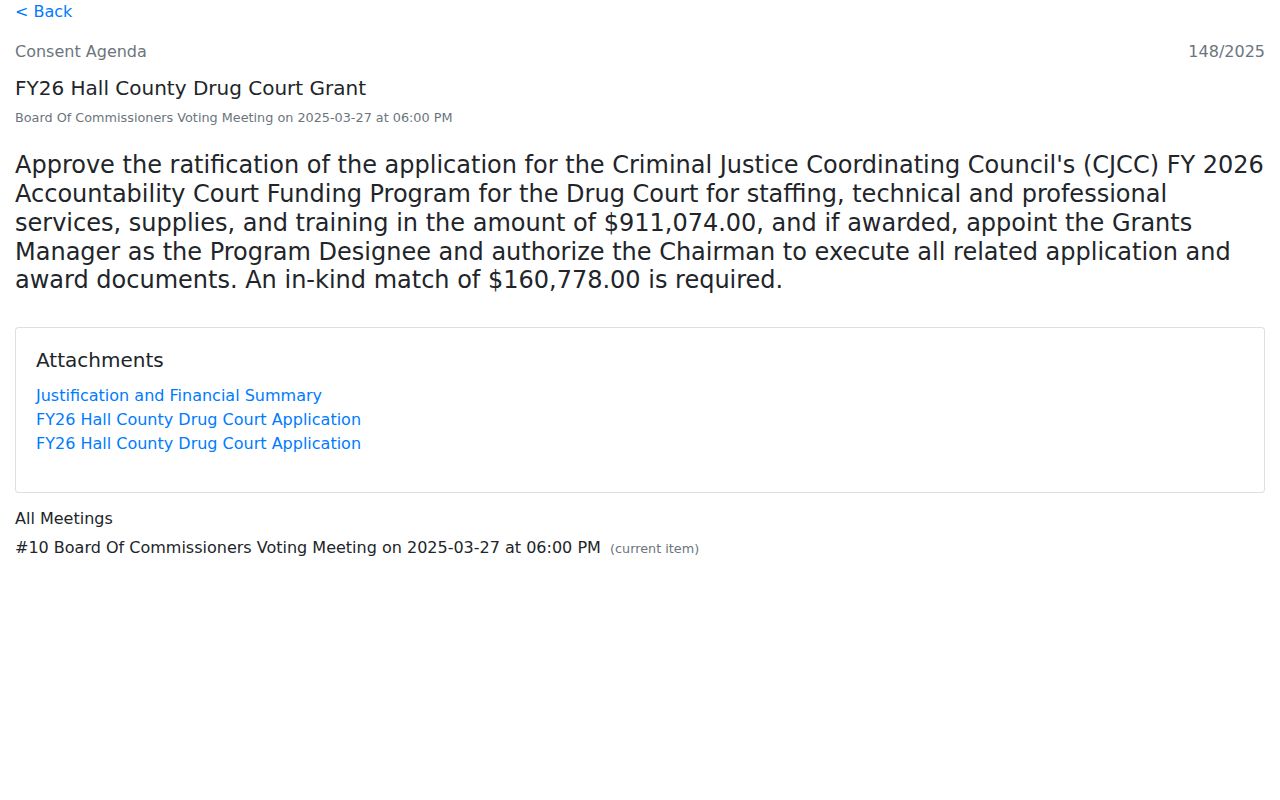
Administrative sources provide context, while the clerk's own file remains the authority for a specific case.
Where Gainesville Records Go
Each office adds a different event. GPD creates the incident and arrest report. Hall County Jail creates the custody entry. A prosecutor selects the charge to file, and the correct court records hearings, pleas, orders, disposition, and sentence. Courts and criminal-justice agencies later report eligible outcomes to the Georgia Crime Information Center.
Record flow: Gainesville Police Department › Hall County Courts › GBI Georgia Crime Information Center
Reporting does not happen at one instant. A booking can appear before a case is filed. The local docket can show a disposition before it links to the matching GCIC arrest cycle. Correct a source event with the originating agency or court before asking GCIC to change the state history. The broader Hall County criminal history overview explains how those layers fit together.
Gainesville Records and Georgia Checks
Georgia Felon Search is the official public product for qualifying in-state felony convictions. It requires a full name, race, sex, and date of birth and charges a transaction fee shown by the live portal. It is not a full Gainesville history, a police-report archive, or proof that no misdemeanor or out-of-state record exists.
A person reviewing a fuller Georgia history may use a local law-enforcement history product or an authorized fingerprint process. Georgia Applicant Processing Service uses IdentoGO and an agency or personal service code. The code controls the purpose and result route. Gainesville city sources do not turn that state service into a local public name database.
Note: Compare identifiers and final dispositions before relying on any Gainesville criminal record match, especially when the name is common.
Public Access Rules in Gainesville
Gainesville must respond to a request for existing city records under the Georgia Open Records Act, but the law does not require the city to create a new report or release every protected detail. Active investigations, juvenile information, victim identifiers, restricted criminal-history information, and other exempt material may be withheld or redacted. A response should cite the legal basis for withholding.
Broader criminal-history dissemination follows separate rules. Public felony-conviction information may be released without consent when the required identifiers are supplied. Broader Georgia criminal-history information about another person generally requires written consent. Court access, police-report access, and repository dissemination are related but not identical.
Key Statutes:
Georgia Open Records Act, O.C.G.A. §§ 50-18-70 through 50-18-77 requires a timely status response and the most economical reasonable production method.
O.C.G.A. § 35-3-34 separates public felony-conviction access from broader criminal-history dissemination.
Georgia record restriction rules provide a process for eligible arrest cycles but do not erase every source document.
Read Gainesville Crime Data Carefully
Gainesville's 2024 Census estimate was 47,712, making it the largest incorporated city in Hall County. That population fact should not be combined with Hall County offense totals to invent a city rate. Comparable local counts should come from the FBI Crime Data Explorer with Gainesville Police selected, the year stated, and reporting completeness preserved.
The city pages reviewed did not publish a stable offense table suitable for quotation. Omitting an unsupported number is more accurate than importing a commercial safety score or adding together agencies that may already be represented in a county total. A GPD report concerns a city event. A Hall County total can include other departments and unincorporated areas.
Note: Gainesville city data and Hall County totals describe different geographic and agency scopes, even when both sources use the same year.